
After the escalation of violence in Aleppo and northeast Syria in January, many families were forced to flee their homes as winter temperatures dropped below –5°C, turning shelters into harsh living environments.
After years of repeated displacement and economic strain, daily life has become increasingly difficult, with needs rising as resources remain limited.
In Qamishli, classrooms once filled with students now shelter displaced families. School floors have become sleeping spaces, and cold, damp conditions shape daily life, especially for children, for whom these spaces no longer mean learning or play, but survival.
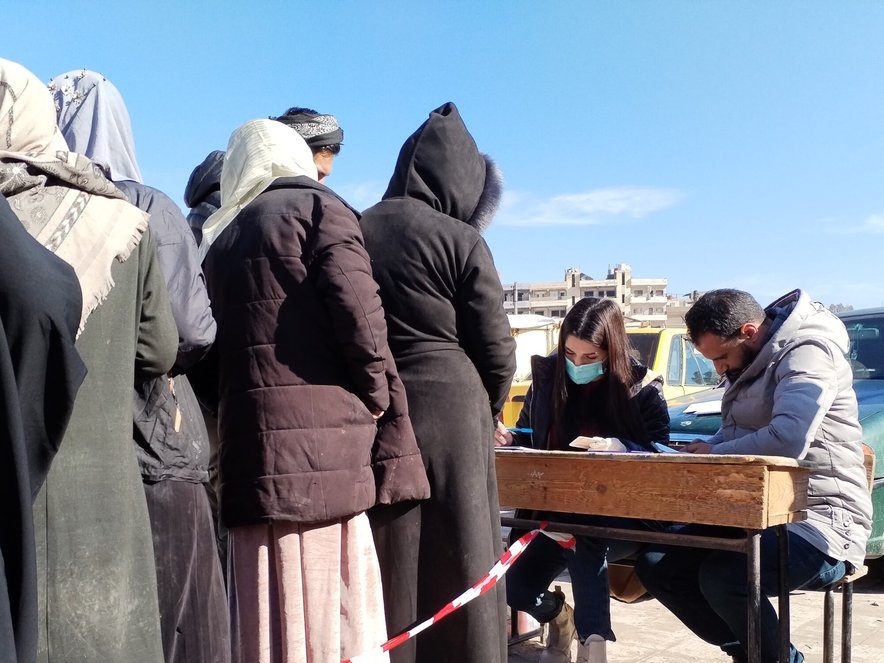
CARE International is responding to the urgent needs of families displaced by the recent escalation, providing cash assistance funded by the EU to help them cope with the harsh winter and repeated displacement. CARE aims to reach 1,130 displaced families, supporting them to meet vital basic needs such as heating, shelter, and essential daily expenses. Here you can read about the impact this vital support will have for women and their families during the coldest months of the year.
Umm Ahmad: “I will buy winter jackets for my children”
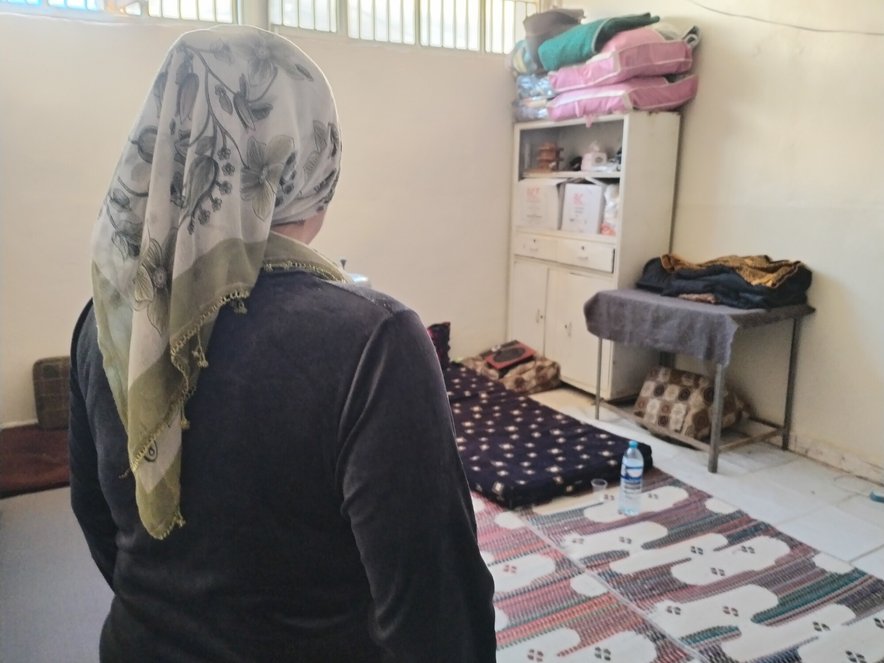
Umm Ahmad is 38, and a mother of four children. Their home in Aleppo has become just a memory, and displacement something they have learned again and again.
“On the road, we picked scraps from the ground to burn, just to feel a little warmth,” she says. Days passed without a place to rest, and nights were spent moving from one area to another. When they finally arrived in Qamishli, they had nothing but the clothes they wore. Neighbours offered a few thin mattresses, and six people slept pressed together in a small space."
For the first nights, the children woke up from the cold. We held them close and whispered until morning.” - Umm Ahmad
With the cash support they have received, Umm Ahmad hopes to buy winter jackets for her children, cooking gas, and simple food for the days ahead.
“With the 150 dollars we received, I will buy winter jackets for my children first. They are still wearing the same clothes from the day we left Aleppo. I also need gas and basic food like oil, sugar, and rice,” Um Ahmed says.
Shereen: “I will go to the doctor and get my medicine”
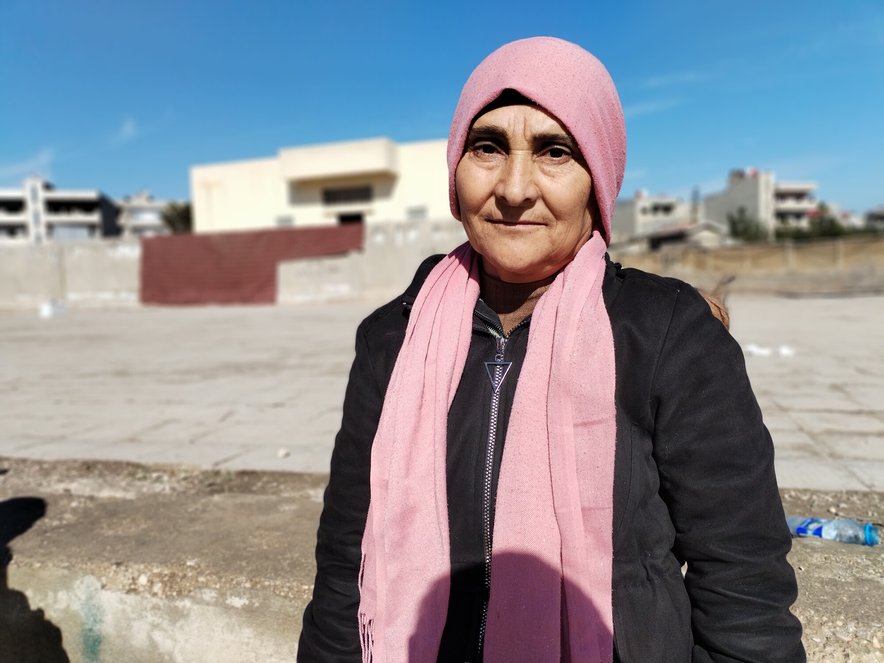
Shereen is 53 years old. For over a year, she has moved between places, and a few days ago she arrived in Qamishli with the same neighbours she has relied on for years. They share one room now, inside a school, not because they are related, but because life has kept them together.
Shereen lives with ongoing health challenges that have followed her since childhood. Years passed without medical care, as survival always came first. Now, even simple treatment feels like a long-delayed step toward dignity. Her wish is modest and clear, to restore her health and, one day, go to Damascus or Aleppo for proper care. Until then, she holds onto the small chances that allow her to keep going.
“With this money, I will go to the doctor and get my medicine. I also want to see a dentist because my teeth need care. My health is the most important thing to me after all these years.” Shereen says.
Dilan: “True resilience lies in the ability to support others”
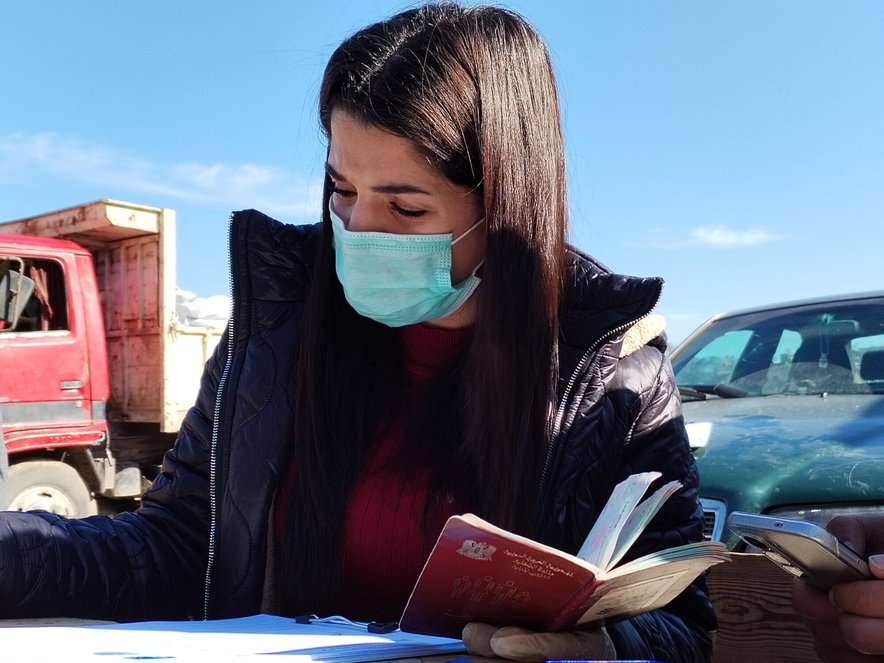
Dilan, 29, is a CARE Emergency field team staff member. She was displaced from Al-Hasakah with her daughter and mother-in-law, arriving in Qamishli in the middle of a harsh winter. The house they found was empty, with no furniture or supplies. Snow blocked the roads, fuel for heating was scarce, and the cold made every day a challenge.
Despite the cold, snow, and long hours, she continued her humanitarian work without interruption. Leaving her daughter in the care of her grandmother, she provided support to displaced families whose struggles reflected her own.
Dilan’s life today is a reflection of countless Syrian women, carrying the responsibilities silently, balancing care for their families with service to others. The support she gives and receives is more than aid; it is dignity and hope amidst uncertainty and displacement.
“Alongside my work, I carry multiple roles as a woman: I am a mother to a young girl and a daughter of a family displaced from other areas within the same country. I strive daily to balance my family responsibilities with my professional commitments. Continuing field work despite displacement and multiple responsibilities reflects my professional and humanitarian commitment, and my belief that true resilience lies in the ability to support others even in the most difficult circumstances,” she adds.
“I had to be both a mother and a father at the same time, making every decision for my family while facing fear and uncertainty around us. Even during official holidays, I continued working, because the needs of displaced people did not stop. In their faces, I saw my own story reflected, and from them I drew strength and purpose.” she concludes.
How you can help people facing crisis
Right now, millions of women and girls like Um Ahmed and Shereen are living in unimaginably difficult situations. In Syria, in Gaza, in many other countries across the globe – women are suffering the horrendous impacts of conflict and crisis.
You can help change this. Your donation today could help send a CARE Package containing life-saving supplies like food, medicine and blankets to a woman and her family who need urgent support this winter and beyond.


