
During humanitarian crises, traditional expectations about men and women often become stronger. But in northern Mozambique, where conflict, cyclones, and floods have forced hundreds of thousands of people from their homes, women are working to change those expectations.
As communities rebuild their homes, women are taking a lead role in the construction process - and redefining expectations of what they are capable of in the process.
This shift is at the heart of the Women in Shelter Design in Mozambique (WiSDiM) research project. Conducted in 2025 across five sites in Cabo Delgado, the research explores how supporting women to lead in shelter construction strengthens communities, challenges long-standing gender norms and supports long-term recovery.
An inclusive approach to rebuilding
The WiSDiM research project is a collaboration between Shelter experts at CARE Mozambique and CARE International UK, exploring the impact of women’s participation in construction. This is a core element of CARE Mozambique’s shelter approach, where women are encouraged to join construction committees, learn new skills, and take leadership roles alongside men – activities not usually undertaken by women in Cabo Delgado.
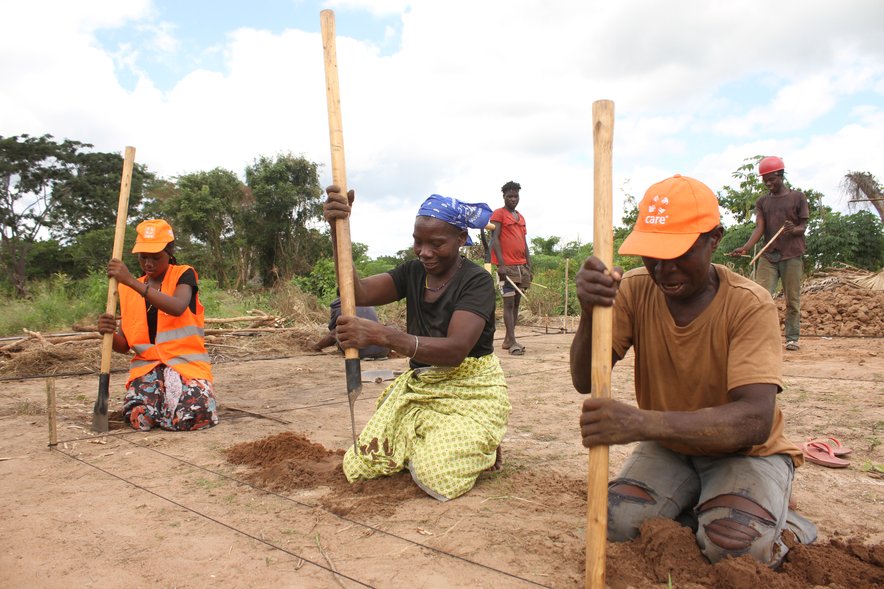
This has led to a new way of building shelters that puts gender inclusion at the centre. It supports women to take leadership roles in building emergency and temporary homes after cyclones and conflict force people to flee
Deep-rooted gender roles across communities
Across the five areas where research took place, social expectations around gender roles were broadly consistent. Men were broadly viewed as leaders, decisionmakers and primary providers, whilst women were seen as caretakers and homemakers. This was echoed even amongst women who had become heads of household due to displacement or widowhood. As one woman explained:
“The man has the most say in the house… he’s the one responsible for making decisions.”
These traditional norms can be reinforced during displacement, as women’s domestic burdens intensify with reduced access to essential services. At the same time – as shown by the research - humanitarian crises can create opportunities for role transformation.
CARE’s promotion of women’s participation in construction committees has helped challenge long-standing assumptions and broaden the acceptance of women undertaking tasks previously considered ‘men’s work’. Through the committees, both women and men gained new technical skills in construction - digging foundations, tying structures, and preparing construction materials. As one participant noted:
“Nowadays, when we see women building houses, it’s a very good thing because they can help themselves’’
Rebuilding with skill and confidence in Nacivare
In Nacivare (Chiúre District), CARE and local partner KAERIA completed an Irish Aid–funded project in 2024 to construct 91 transitional shelters. Five women and twelve men formed the construction committee responsible for building zinc roofed, two room homes.
One of these women was Essefania Cesar Ussene, a mother of eight whose husband was killed during the armed insurgency in Cabo Delgado. Essefania and her children were forced to flee their home in 2021. At first, she lived in a makeshift bamboo and tarpaulin shelter. When CARE and local NGO KAERIA approached her to join the construction committee building transitional shelters, she didn’t hesitate.
“My whole community was suffering, and I wanted to be part of the solution.”
Despite never having worked in construction, Essefania learned quickly. As she helped to build the shelter structures, she found new confidence along the way.
“I am pleased that I now have the skills to maintain my own home and support my family. I took strength and confidence from the community around me working towards a common goal.”
It is not the norm for women to work in construction in her community, but Essefania reported that men were supportive. And while she was initially daunted by the prospect of taking part in shelter construction, she now has skills she can use again and has already earned income from construction since the project ended.
Equal participation and stronger communities
In Manicane, in Quissanga District, CARE is building 227 stronger temporary homes. The goal is to help communities better withstand climate disasters like cyclones. CARE asked the community to choose an equal number of women and men to join the construction committees that are building the homes. One of the volunteers is Dawa Bawh Momade, who lives with her husband and five children in a temporary shelter after fleeing conflict in 2023.
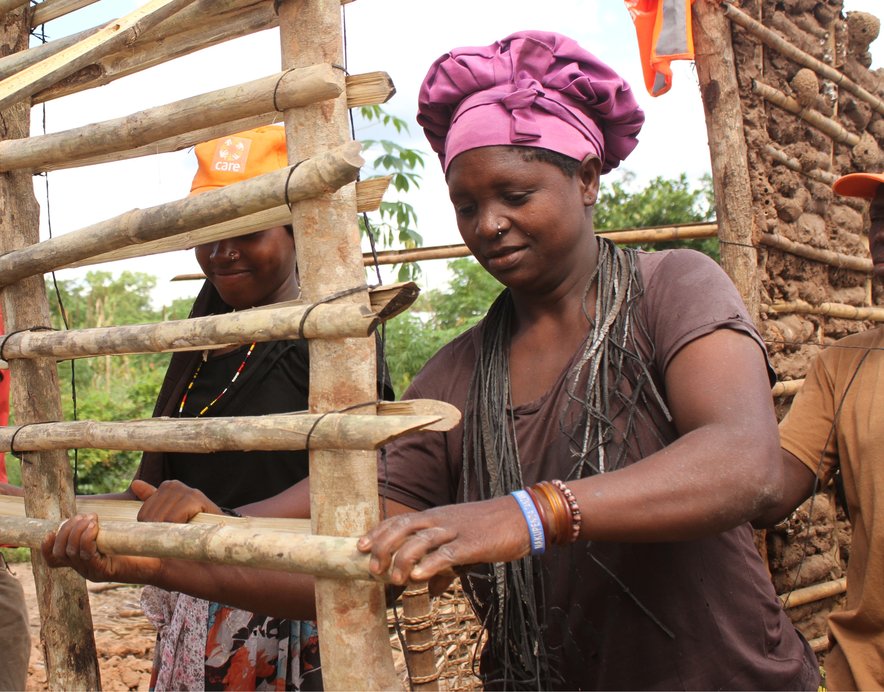
Dawa works alongside men in a six-person team building the wooden frames and bamboo walls of the new shelters. Her husband supported her decision to work on the project, and Dawa describes how it has shifted her standing in the community.
“I am a strong woman. I have no issues with the work, and I feel as if I am now a woman with dignity and standing in this community.”
She hopes the new three-room shelters will offer her family a safer, more secure home - vital in an area prone to severe storms and cyclones.
Long term impact: Building skills for the future
Community members say they now have the knowledge to maintain their homes long after CARE and partner NGOs leave. In Meluco, a community leader explained:
“There will be no need to call CARE again to fix them; the community is already prepared.”
Training women in construction does more than build houses - it builds confidence, skills and resilience. In Cabo Delgado, where conflict and climate emergencies continue to uproot families, women are helping lead the way toward stability, one shelter at a time. CARE Mozambique aims to support more women as they do this, using the research findings to advocate for more gender-inclusive shelter programming and funding for more durable, longer-lasting shelters.
-
Shelter in Lebanon: The first step towards dignity and recovery
Find out how Jinan, CARE's WASH and Shelter Manager at CARE Lebanon, is ensuring dignity and inclusion are at the heart of CARE's shelter response in Lebanon.
-
Shelter in Cabo Delgado, Mozambique: “We’re going to build this together”
Shelter Advisor Lorena Dossantos talks about CARE’s work with communities in Mozambique and her experience delivering shelter support in conflict-affected regions.
-

Shelter
Emergency shelter protects vulnerable people from danger, suffering and exploitation following a crisis, whether man-made or the result of a natural hazard.


