
In the eastern part of the Democratic Republic of the Congo (DRC), years of conflict and repeated displacement have left many families without safe places to call home. In villages around the city of Goma, houses have been destroyed, looted, or abandoned as people have fled violence and then returned, sometimes several times. The nearby active volcano, Nyiragongo, also causes periodic displacement in the area. For many families, rebuilding a permanent home is out of reach; building materials are expensive, incomes are fragile, and insecurity continues to disrupt daily life. Many families have been living in cramped, insecure makeshift shelters constructed from plastic sheeting and salvaged timber.
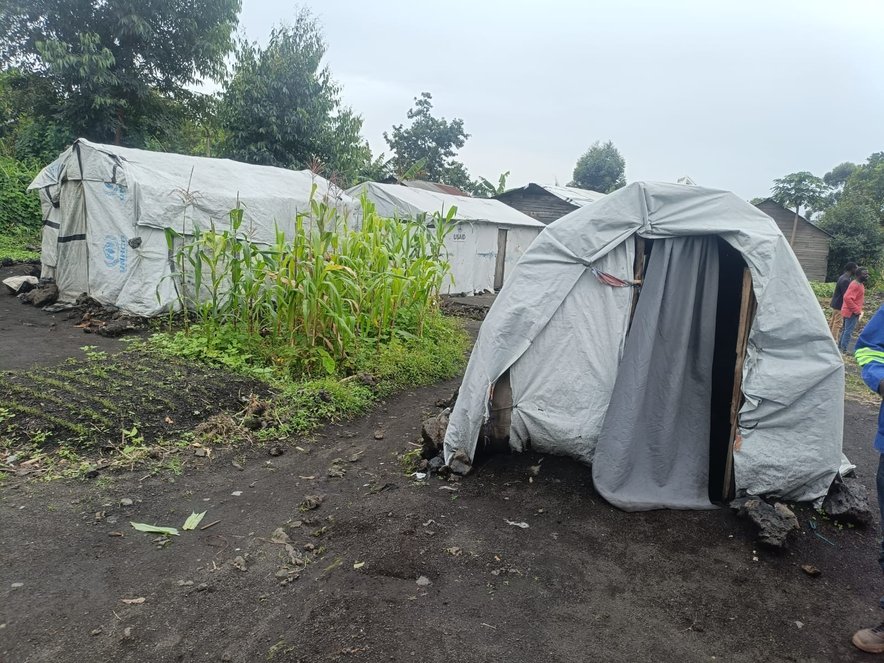
In this challenging context, shelter is more than a roof. It is protection from the elements, a sense of safety and dignity, and a foundation for families to begin rebuilding their lives. But what if rebuilding homes could also help rebuild futures - especially for young people?
A different approach to shelter support
In North Kivu Province, CARE and partners supported the construction of 560 transitional shelters, providing safer housing for around 3,360 people in several villages near the city of Goma. These shelters are designed to be strong enough to protect families and create safe and dignified living conditions now, but flexible enough to be improved, extended, or transformed over time as circumstances change.
What makes this project distinctive is not just what was built, but who built it.
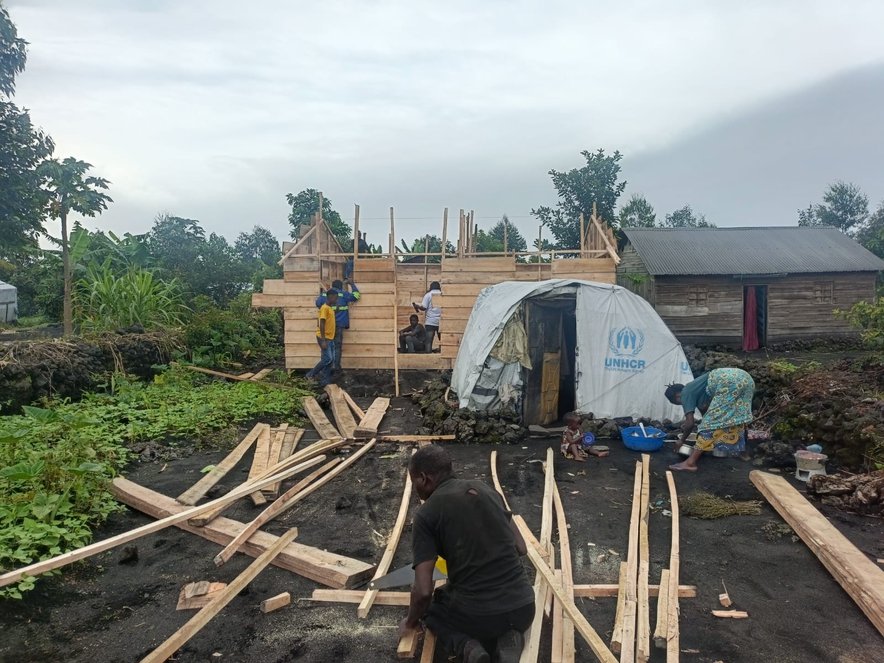
Rather than relying on external contractors, the project placed local youth, aged between 15 and 24, at the centre of shelter construction. By partnering with existing youth associations, these young people became the main workforce behind building the shelters. Many of them already had practical skills, but few had stable work opportunities. By engaging young people directly, the project aimed to meet immediate humanitarian needs while also supporting livelihoods, skills development, and community ownership of the project.
Youth as leaders, builders and organisers
Youth associations did far more than provide labour. Their internally appointed leaders coordinated construction teams, allocated tasks, managed materials, and monitored progress across multiple sites. CARE’s technical staff provided guidance, standard designs, and regular supervision, but day to day organisation remained firmly in the hands of young people.
Working within their own communities brought important advantages. Communication between builders and families was easier and more informal. Households could discuss small changes during construction, and youth artisans were responsive to local preferences and constraints.
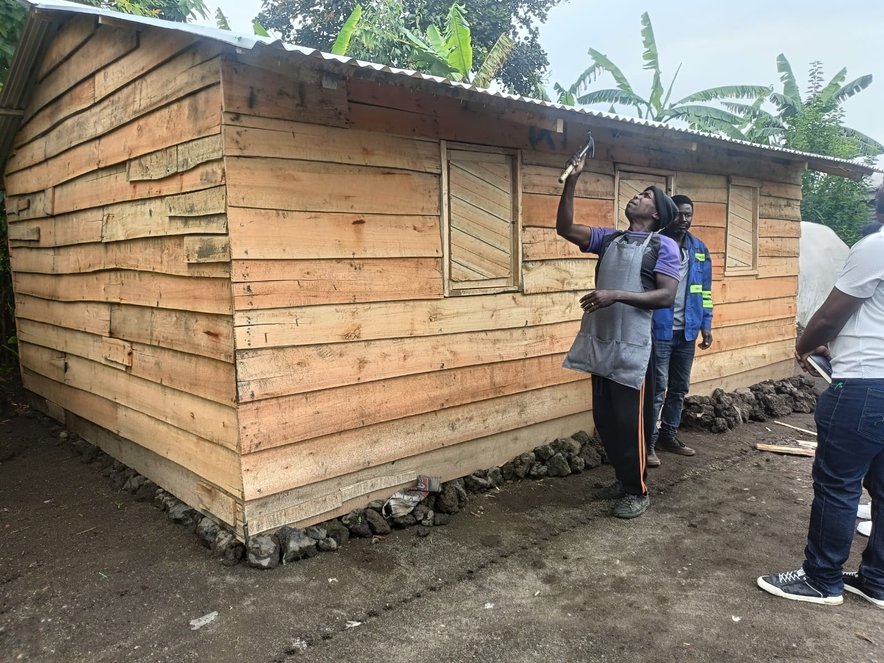
As one community member explained, shelters built by familiar faces were not anonymous humanitarian structures, but homes shaped through shared effort. The shelters themselves reflected this approach. Built with timber frames, locally sourced wooden walls, and corrugated iron roofs, they incorporated build back safer features such as reinforced connections and stronger roof anchoring. This improved durability while keeping designs simple and adaptable.
After moving in, many families quickly began making changes - adding internal partitions, extending walls, or personalising spaces. This kind of adaptation was not only expected but encouraged. It showed that the shelters were doing what they were meant to do: providing a safe starting point for recovery rather than a fixed endpoint.
Benefits beyond shelter
The impact of this youth led approach went well beyond physical structures. For young people, the project offered short-term income, practical experience, and opportunities to strengthen leadership and organisational skills through coordinating teams, managing materials, and ensuring quality.
For communities, seeing youth lead recovery efforts helped build trust and social cohesion: shelters were constructed with the community, not simply for it. This local ownership strengthened acceptance of the programme and helped revive a sense of collective responsibility. On a site visit to the village of Sake, Senior Technical Advisor Justus Kikuvi saw early impacts of the shelter construction on the whole community:
“There is renewed energy, fields are being cultivated, children are playing again, and families are beginning to invest in income-generating activities because they once again have safe homes. This support has laid the foundations for recovery, restoring stability, dignity, and hope.”
For humanitarian response, the model showed that engaging youth can support timely mobilisation, reduce reliance on external contractors, and align assistance more closely with local realities.
Challenges to overcome
Monitoring during the early phase of the project also revealed some challenges. Youth skills varied, and maintaining consistent construction quality across many sites required intensive technical supervision. Where issues such as inconsistent workmanship arose, they were addressed through additional guidance and follow-up, but this demanded time and resources from CARE’s stretched humanitarian staff. Material supply delays occasionally slowed progress, highlighting how fragile logistics can affect even well organised local teams.
Critically, young women’s participation remained limited, largely due to cultural norms around construction work. While the project created opportunities for youth, it has not yet overcome deeper barriers to gender inclusion, an area that needs more deliberate action in future programmes, in alignment with CARE’s focus on supporting women’s voice and leadership. CARE's shelter programming in Mozambique has been taking a lead in this area, as explored in a recent research project.
A promising path forward
What this project shows clearly is that young people can be the drivers of shelter support. When supported by clear technical standards, strong oversight, and genuine partnership, youth led shelter construction can deliver safe and dignified housing while also building skills, livelihoods, and community engagement. It aligns closely with CARE’s commitments to localisation, participation, and long term resilience.
There is still much to learn. Future initiatives will need to invest more in structured training, inclusive participation, and systems that support quality at scale. But the experience in North Kivu suggests a powerful possibility: that humanitarian shelter programmes can do more than respond to crisis - they can help lay the groundwork for recovery led by the next generation.


