
One year after the major shift in Syria’s governance landscape, humanitarian needs across the country remain critical. Fourteen years of conflict forcibly displaced over 12 million people, including six million who sought safety beyond Syria’s borders. Following the governance change in late 2024, over one million refugees have made the journey home, alongside nearly two million internally displaced people, all seeking to rebuild their lives in a land scarred by war.
Despite hopes for greater stability, millions of Syrians continue to face widespread destruction of homes and infrastructure, limited access to basic services, a severe economic downturn, and ongoing safety concerns making voluntary and dignified return impossible for many displaced families.
Hammoud's story
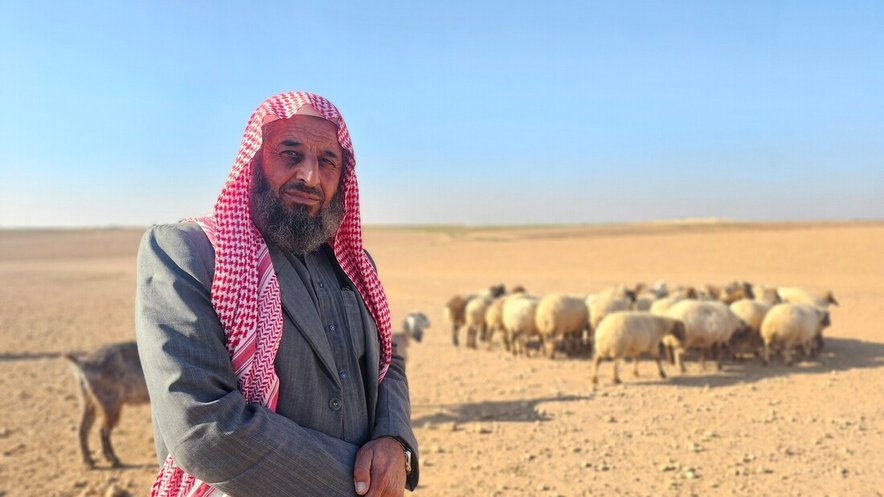
Hammoud, 54, fled Homs in 2011 and has lived in tents as a displaced person ever since. He returned to his home one week after the regime change last December to find his neighbourhood destroyed.
“There are only stones left. I could not even find where my house once stood. We lived there all our lives, now it’s all gone. If I had enough money, I would rebuild it, but we lost everything,” he said.
Even though the conflict has finally come to an end for Hammoud, life is still not safe. Two of his cousins who returned to Homs with him were killed in March after stepping on landmines while taking their sheep out to graze.
From CARE he received cash for the upcoming winter to support his family to get through the cold days.
Zalloukh's story
Zalloukh, 16, recently returned to her hometown after spending 12 years living in a tent with her family. Her parent couldn’t find enough work to while living in the camp, so she helped on the fields to make money – but this led her to miss school and fall behind on her studies.
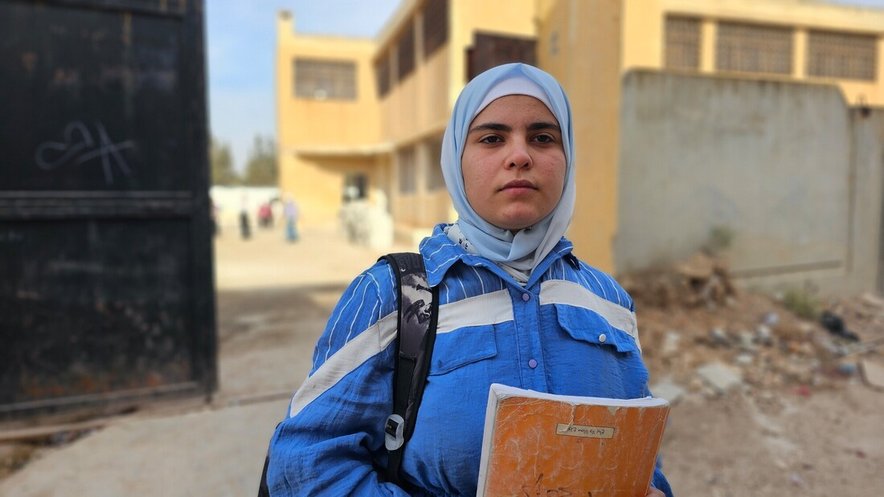
One day, I wish to live in a house that is not broken"
Zalloukh lives in her grandfather’s house which is still standing, yet the windows and doors are broken. The whole family lives together in one room but struggle without regular access to electricity, water or heating.
“I am back in school but how can I get good grades when I was not able to read the books of the exam? How can I do well in school when I have to sit on the floor of our one room in the cold, with my four siblings? How can I fulfill my dream of becoming a lawyer if I am scared living here every day?” she said.
“One day, I wish to live in a house that is not broken, with a garden. And to have a room for myself, maybe even with my own desk to study at.”
Zalloukh attends protection sessions at a community centre run by CARE’s partner Shafak.
Khalil's story
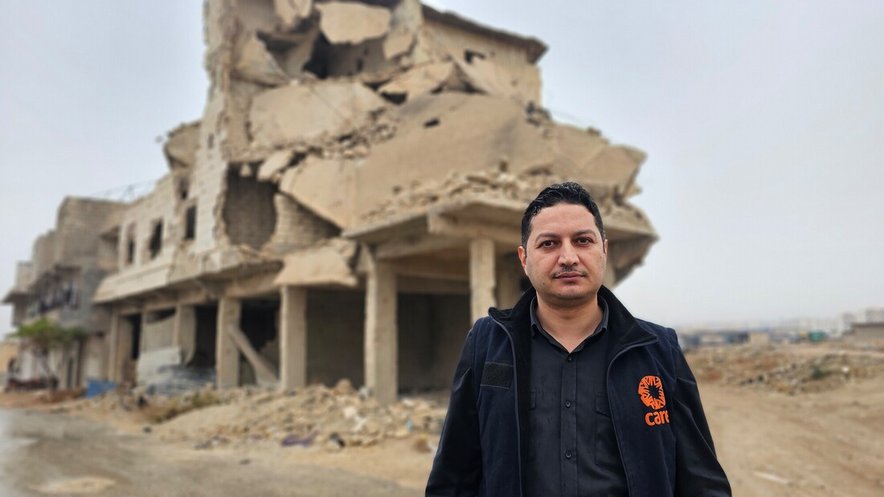
CARE’s Water and Sanitation Manager, Khalil, lived and worked from Türkiye for many years before deciding to return to Syria, and move to Aleppo with his family three months ago. As his children had spent nearly their entire lives in Türkiye, they had to learn to read and write Standard Arabic to attend school in Syria.
“It is difficult for them to adjust as they also had to leave all their friends behind, and life here is completely different,” he said. “In Türkiye, they had access to everything at all hours of the day. Here, I tell them to reduce their water consumption and to only turn on the lights when necessary.”
Khalil installed solar panels and a water tank on his roof because, even in Aleppo, electricity is only available for a few hours every day and water runs only every four days.
“I am happy that we are back in Syria. This is our home. And even with the struggles we face, I am very motivated to support Syrians rebuilding our homeland.”
Mufeida's story
In the town where Mufieda, 72, returned to Syria six months ago from Türkiye, water is only available through water trucks, and it is very expensive.
Even without any services or infrastructure, this is where I belong"
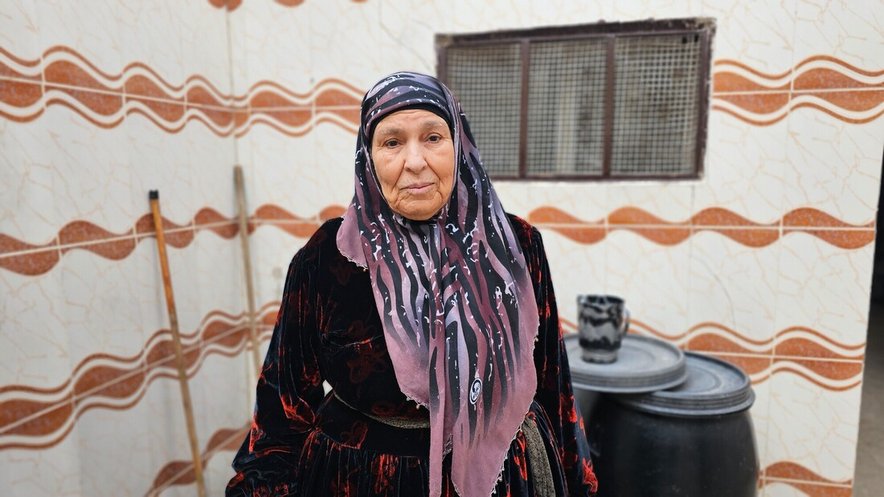
“I knew that when I left Türkiye and come back here, I would face these challenges. But I am 72 years old, and this is my house. I am lucky that it is still standing, even though everything was stolen – even the bathroom taps, doors, and window frames. I no longer want to live in other people’s houses or in camps. Even without any services or infrastructure, this is where I belong,” she said.
With support from CARE and its partner IYD, a borehole and water pump have been rehabilitated giving 24,000 people - including Mufieda – access to water.
“I do not think that Syria is ready yet for everyone to return. Those of us who have returned, now live in poverty and constant fear of not having enough money to make it through the next day.”


