
Overview of the Sudan Crisis
-
30 Million
people need urgent humanitarian support
-
21 Million
people facing acute hunger
-
12 Million
people displaced
9 January 2026 marked 1,000 days of conflict in Sudan.
Over two years of war have displaced around 12 million people either internally or across borders, making it the world’s largest, and fasted growing, displacement crisis.
Over 30 million people – nearly two thirds of Sudan’s entire population – are in need of urgent humanitarian support.
Communities are under siege and civilians are being starved. Millions of people have been displaced, and struggle to access healthcare, shelter, food, hygiene kits, or any of the basic items they need to live in dignity.
A war on women and girls
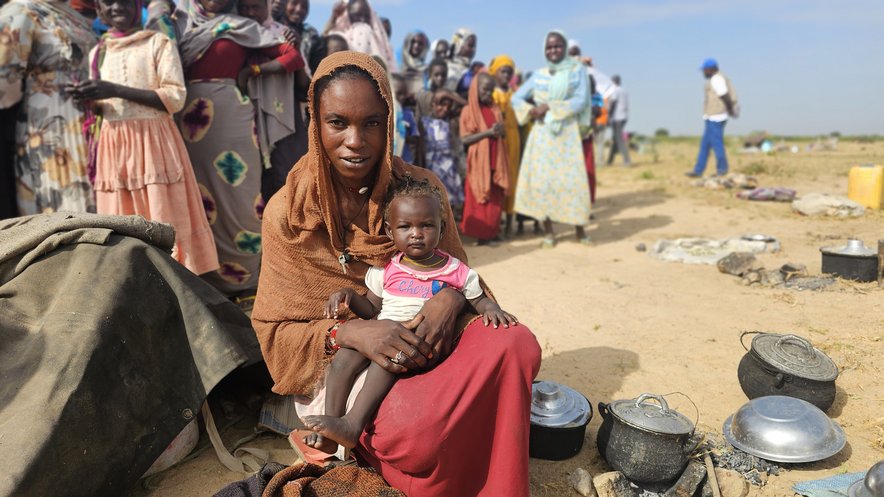
Women and girls bear the brunt of this crisis, facing hunger, violence, and displacement.
Gender-based violence, including conflict-related sexual violence, is rampant, contributing to what has been described as a war on women and girls. Access to protection services for women and girls at risk of violence is severely limited.
Yet they are at the forefront of humanitarian efforts through women-led organisations, providing vital support to women and girls. At the same time, sharp cuts in humanitarian aid have crippled the response. Women-led initiatives, critical for gender-based violence prevention and response services, received less than 2% of resources from the Sudan Humanitarian Fund in 2025.
Without immediate international attention and action, millions will continue to face escalating violence, extreme hunger, disease outbreaks and displacement. This is destabilising the whole region. Any further delay risks fuelling the spread of famine and atrocities.
Brief history of the conflict in Sudan
The civil war in Sudan started on April 15, 2023, when fighting erupted between the Sudanese Armed Forces (SAF) and the Rapid Support Forces (RSF). Since then, civilians’ lives have been plunged into chaos.
Women and girls face the constant threat of sexual violence, civilians and infrastructure are frequently targeted, and children recruited as child soldiers.
Fighters in Darfur have been accused of ethnic cleansing, and in November 2025 the UN Special Adviser on genocide prevention sounded the alarm over widespread allegations of atrocities committed in El Fasher.
Sudan: Key stats and figures
- Up to 150,000 people have been killed so far, making the conflict in Sudan one of deadliest in the world.
- Over 30 million people need urgent humanitarian assistance, including 17.3 million children
- Around 12 million people have been forced to flee their homes - more than the populations of Scotland, Wales and Northern Ireland combined
- 21.2 million people are facing acute hunger
- More than 90% of schools remain closed
- Over 70% of hospitals have been damaged or destroyed
What problems do people face in Sudan?
The crisis in Sudan has reached catastrophic levels – with suffering on a scale that could have been prevented if governments had acted earlier. It is being driven by conflict, the destruction of markets and agriculture, collapsing health services and the obstruction of aid.
More than 2 in every 3 people across Sudan are reliant on humanitarian assistance. Yet the humanitarian response is massively underfunded and hindered by access restrictions, particularly in conflict zones.
People in Sudan now need urgent emergency aid including food, water and shelter provision, health services, and gender-based violence and psychosocial support.
Humanitarian needs in Sudan
Needs continue to rise across the following areas:
- Food: Communities are cut off from the vital food aid they need to survive. Famine has been declared in parts of Sudan. Right now, emergency food assistance can only reach one in five people who need it.
- Water, sanitation and hygiene (WASH): People need emergency WASH support including trucking, the rehabilitation of available systems and emergency latrines.
- Shelter: Shelter needs are at a critical level. Internally displaced people are at times without any shelter, which is especially harsh during the winter season. There is huge need for emergency shelter kits.
- Gender-based violence services: Women and girls need safe spaces, dignity kits, medical and psychological support services
The conflict has placed immense pressure on neighbouring countries, with millions fleeing across the borders into South Sudan and Chad, straining already scarce resources of food, water and sanitation, amidst severe funding cuts.
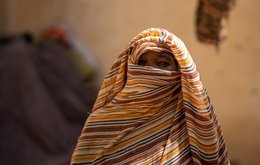
34-year-old Nima was forced to flee Sudan with her four young children. Now living in a refugee camp in Chad, her daughters know first-hand what war looks like:

You can help provide life-saving aid for women like Nima, so they can survive this horrific conflict and build a better future for themselves and their families.
How women and girls are affected by the crisis in Sudan
Women and girls make up more than half of all displaced people in Sudan, and are especially vulnerable in this crisis.
- All forms of violence against women and girls have drastically increased since the conflict broke out
- Around 6.9 million people are at risk of gender-based violence (GBV) and there has been a 288% rise in demand for gender-based violence services since December 2023.
- Women and girls face the constant threat of sexual violence, which is increasingly used as a weapon of war.
- Evidence shows that women and girls from ethnic minority groups are being deliberately targeted.
- Millions of girls also face heightened risks of exploitation, early and forced marriage, and separation from their caregivers and starvation.
- Survivors desperately need medical, psychological and social support services.
- Women-led initiatives play a crucial role in the prevention of gender-based violence and providing essential services to survivors – yet they receive less than 2% of the critically-underfunded Sudan Humanitarian Fund (SHF).
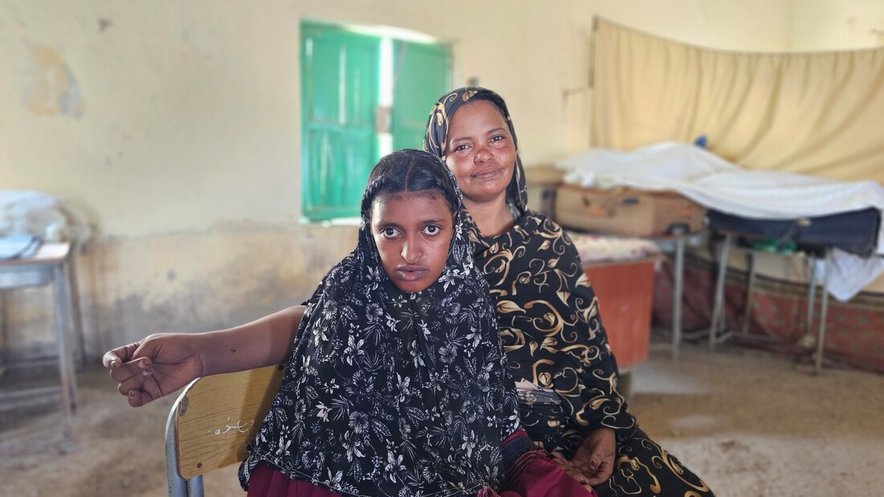
The scale of the crisis was captured by Nada, a woman who fled her hometown of Al Jazirah more than two years ago and remains displaced in Port Sudan:
“I am just one of millions whose life was shattered. I lost everything. We need support to restore our lives, so we can live again. We cannot continue like this.
“This will kill us one day – and soon. I am afraid every day. Being shot at or hearing explosions does not frighten me as much. What scares me is this slow death of everyday life.”
CARE's humanitarian response in Sudan
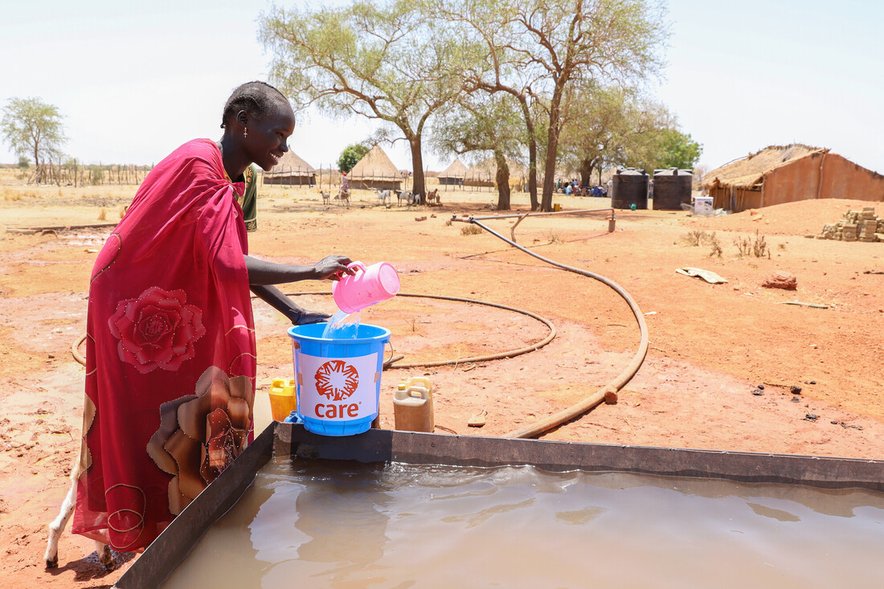
CARE International began working in Sudan in 1979, focusing on improving water supplies, forestry and energy conservation, and assisting refugees fleeing war in Eritrea.
Right now, CARE International's expert teams are in Sudan delivering humanitarian support. Since last year, we’ve provided over 2.6 million people with vital food, water, hygiene kits and access to essential medical and mental health support. Along with our local partners, we’re working with women so they can protect themselves, their families and their communities.
CARE currently works in East Darfur, South Darfur, South Kordofan, Kassala, and Khartoum where we focus on providing relief services to internally displaced people, assisting populations affected by conflict to restore livelihoods, and promoting peace and stability. Current activities include improving water and sanitation, hygiene education, primary health care, nutrition, and livelihood support.
In South Darfur, over a quarter of a million people have been supported through our food security project for internally displaced people, which ensures that women are the recipients of family rations in addition to our emergency health and nutrition work and our water and sanitation projects.
How can I help people in Sudan?
-
Donate to CARE's Sudan emergency appeal
Donate today to help provide life-saving supplies and support, including clean water, food and medicine.
Donate now
-
Demand Government action on Sudan
Sudan has suffered enough. Women, children and communities can wait no longer. Add your name to urge the UK Government to act now.
Add your name

