
24 February 2026 marks four years since the escalation of the war in Ukraine.
Russia’s full-scale invasion could have broken Ukrainian society and destroyed the ability of communities to act together. But instead, the people of Ukraine have responded by facing fear, displacement and constant danger with remarkable resilience.
The strength and determination of individuals and communities – to adapt, to survive, to support others in need – has been evident in Ukraine even throughout the toughest of circumstances.
Here we share four stories that show Ukrainian resilience in action. Four stories of people who have shown amazing inner strength when faced with the trauma and horrific realities of war.
Resilience in Action: Iryna’s story
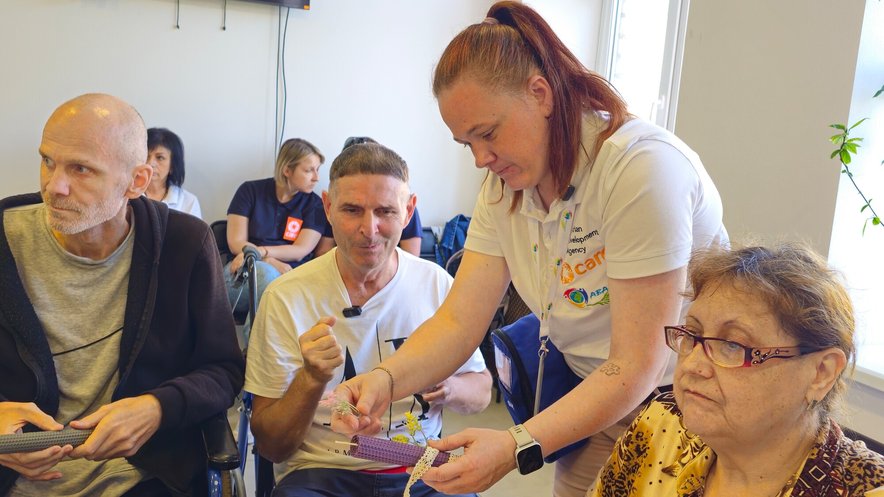
In spring 2022, Iryna, a 36-year-old woman from a small town in Donetsk region, fled shelling holding her son’s hand, taking only documents and their cat. Together with her mother, she found shelter near Dnipro, in a former summer children’s camp that was never meant to house hundreds of people through winter or prolonged displacement.
Conditions were harsh: one shower for dozens of residents, limited hot water, a single washing machine for more than a hundred people. Yet it was there that Iryna saw not only her own vulnerability, but the even greater needs of others.
Iryna recalls:
At least I had my mother and her pension. Around me were single women with children who had nothing at all.”
Iryna began acting instinctively – searching for humanitarian aid, organising activities for children, creating a sense of structure and safety amid chaos. Over time, her initiative grew into cooperation with humanitarian organisations. That was how she met Avalist, a CARE partner organisation.
Today, Iryna works as a social worker in a mobile team supporting people affected by displacement and trauma. She facilitates psychosocial support groups, and continues helping those who are only beginning to navigate life in a new reality.
Iryna’s resilience did not start with resources, it developed from someone being in need of assistance to someone providing it. Her story shows how humanitarian aid is most effective when it builds on the inner strength of people themselves.
Resilience through solidarity: Nataliia’s story
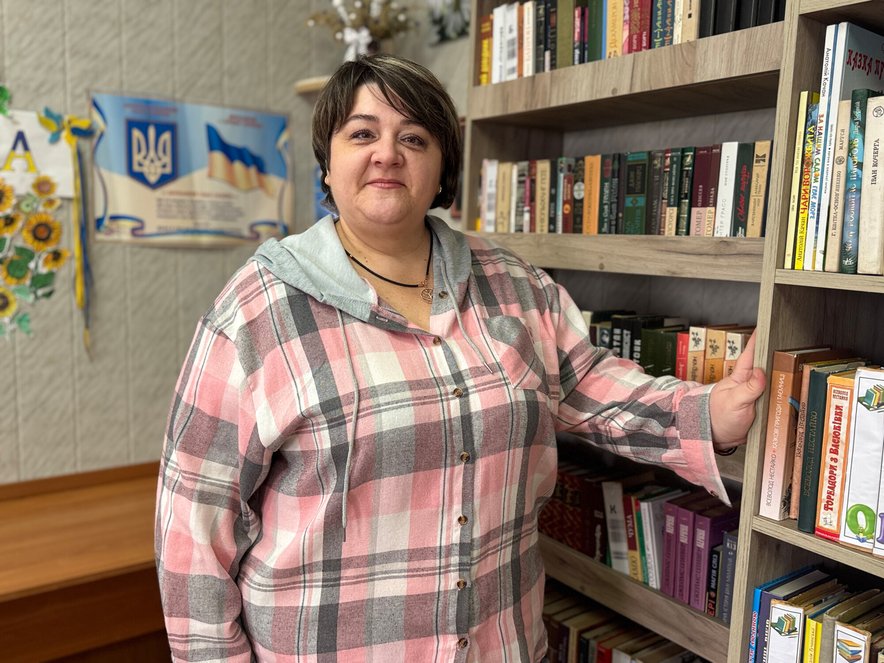
We have to learn to live here and now. The past will not return – but we can still look ahead.” - Nataliia
Nataliia is a participant in CARE’s Women Lead in Emergencies (WLiE) programme. After completing trainings on women’s leadership, engagement with local authorities, and crisis response, Nataliia’s group decided to focus on a practical solution for their community, and purchased a wood chipper.
At first glance, a small infrastructure detail. In reality, a strategic investment. Clearing abandoned areas that quickly overgrow with bushes, producing alternative fuel during attacks on the energy system, and supplying materials for maintaining a historic park. It is an example of how local solutions create long-term resilience.
“Older people living alone cannot carry heavy firewood or coal,” Nataliia explains. “But the wood chips left after processing are easy to collect and light. It’s something that benefits many people. In war, you have to think not only about yourself, but about those around you.”
Resilience as a moral choice: Volodymyr’s story
In war, resilience is not only the ability to endure. It is also a choice – how to respond to violence, and who to remain after it. For many Ukrainians, that choice means refusing dehumanisation, even after becoming victims themselves.
Volodymyr survived illegal detention and torture in occupied territory. After returning home, Volodymyr joined initiatives supporting former civilian detainees run by the NGO “Divchata.” He helps others speak about their experiences, access legal and psychological support, and document human rights violations. For him, this is a way to reclaim agency and refuse the role of victim.
I don’t want hatred to be my only response to what was done to me,” he says. “If we lose our humanity, victory loses its meaning.” - Volodymyr
This moral choice has a collective dimension as well. Across Ukraine, it is visible in conscious work with memory-creating memorials, educational programmes, and documenting war crimes. Memory here is not about revenge, but about responsibility and prevention.
Choosing to work through trauma rather than transmit hatred is a form of resilience that rarely makes headlines, but has a lasting impact.
Resilience as presence: Viktoriia’s story
In war, resilience does not always mean moving forward. Sometimes it means choosing to stay – to return again and again to places that are dangerous, exhausting, and offer no quick results.
Doctors, social workers, energy workers, water utility staff – hundreds of thousands of people across Ukraine remain in frontline areas to support those who cannot leave.
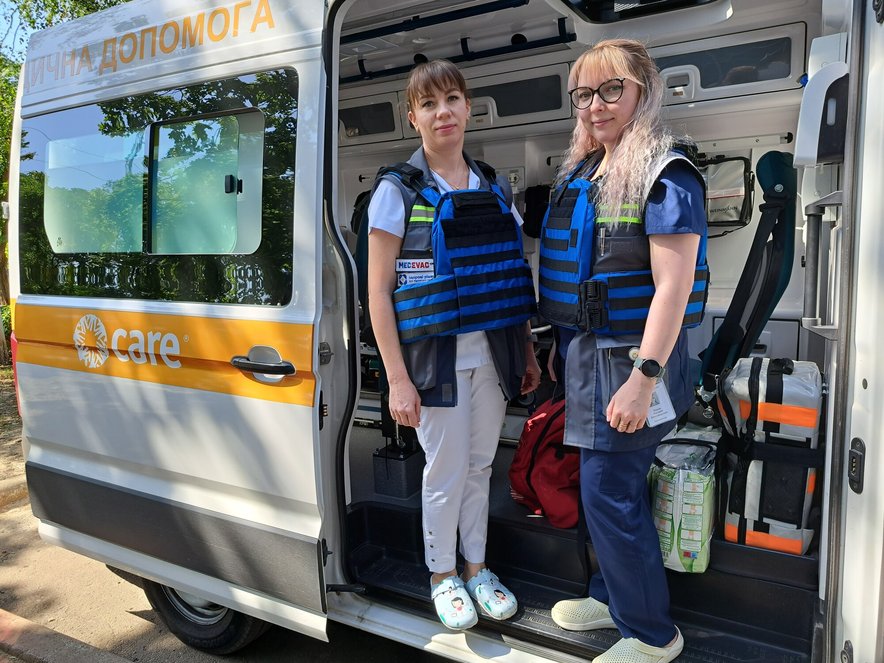
In Kramatorsk, this kind of resilience is embodied daily by Dr. Viktoriia Vinnyk, who works as part of a mobile palliative care team. Together with her colleagues, she visits patients unable to reach medical facilities – people with severe chronic illnesses, cancer patients, and those with limited mobility.
“We visit six or seven patients every day, providing medical care and essential supplies,” she explains. “Many are bedridden and have not left their homes for years. For them, each visit is a moment of hope.”
Every trip carries risk. Due to constant shelling, medical teams sometimes work in body armour and helmets, regularly undergoing safety training-yet no measures guarantee full protection.
“Recently, an aerial bomb landed very close to our ambulance,” Viktoriia recalls. “The siren didn’t even have time to sound. We waited, calmed down, and continued-because patients were waiting.”
She had the opportunity to evacuate and spent time in Dnipro, but chose to return.
As a person, I would have left long ago. But as a medical professional, I know I cannot abandon these people. I am needed here, and I will stay as long as I am needed.”
Resilience built every day
Four years into the full-scale war, Ukrainian resilience does not resemble a heroic poster. It is evident in people’s everyday choices: to remain human, to act together, to stay present.
Street festivals in freezing Kyiv, candlelit literary evenings during power outages, children’s board game tournaments held in metro stations during air raids-all are evidence that society continues to live, reflect, and resist allowing war to fully define its identity.
It is a resilience that acknowledges exhaustion and vulnerability, yet refuses to let war define who people are. And it remains one of Ukraine’s most valuable resources – today and for the future.


