
Women's leadership in humanitarian crisis - why does it matter?
Women and girls are hardest hit by conflict and disasters - and in ways that differ from men and boys. For instance, pregnant women and girls have specific healthcare needs which often go unaddressed during humanitarian crises. Women are also often the first to respond to meet the needs of their families and communities.
Despite this, women affected by crisis often have little or no influence over the design and delivery of humanitarian assistance. This matters because women have a right to participate in decisions that affect their lives. It also matters because, without women’s participation, humanitarian assistance often does not meet women and girls’ needs.
From menstrual hygiene to the heightened risk of sexual violence during crisis, if women are not heard on issues which impact them specifically, it’s likely that the services designed by governments or NGOs will fail to address them. Instead, they can reinforce gender inequalities and cause harm.
What is a humanitarian crisis?
Humanitarian crises occur when people are unable to meet their basic needs due to conflict, disasters or climate impacts. While some are sudden - like earthquakes or cyclones - many are ongoing or recurrent, including long-term conflict, displacement and repeated droughts or floods.
CARE’s Women Lead in Emergencies approach works across all of these contexts - empowering women to take the lead in reducing risks before crises, shaping humanitarian response during emergencies, and driving recovery, resilience and peacebuilding over the longer term.
What is the Women Lead in Emergencies approach?
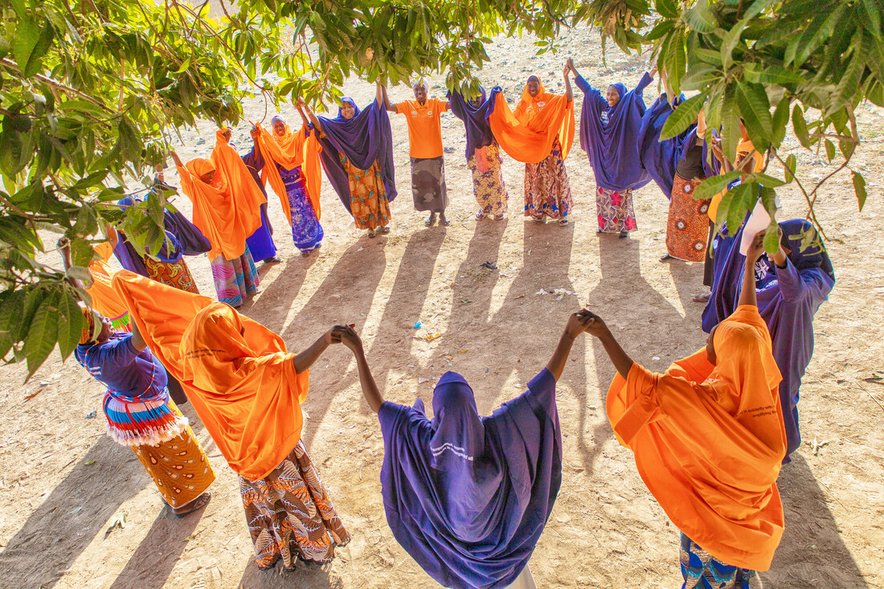
CARE's Women Lead in Emergencies approach shifts power and resources directly to women in communities affected by crisis - enabling them to address critical needs in their communities, before during and after crisis. The approach supports them to overcome barriers to their participation in community decision-making and action.
Women Lead in Emergencies does not prescribe what ‘success’ looks like, but rather supports women’s community groups group to develop and deliver their own community initiatives. This means women can choose to focus on what matters most to them. CARE’s teams and partners support them to achieve those goals. Some of the priority issues chosen by the groups and the outcomes they’ve achieved include:
- In Sudan, women improved access to clean water, improved community health and sanitation practices and drastically reduced rates of Cholera.
- In Ukraine, women improved access to social services for internally displaced people, improved waste management systems for marginalised Roma communities, and several Women Lead in Emergencies groups registered and secured funding as formal women’s rights organisations.
- In Uganda, women secured a new and safely accessible humanitarian food distribution point for women in their refugee camp.
- In Ethiopia, women set up community security patrols, helped rebuild vital infrastructure such as bridges, installed electricity throughout their community, and meaningfully participated in peace and recovery processes.
- In Nigeria, women improved access to gender-based violence referral mechanisms and sexual and reproductive health services for women and girls, increased enrolment of young girls in schools, and reduced rates of Female Genital Mutilation (FGM).
Working together to improve lives for others in their community built women's confidence and skills and showed that, when they have the opportunity, women are effective leaders able to bring about change.
Scaling the Women Lead in Emergencies approach
Since the successful independent evaluation of five Women Lead in Emergencies pilots in 2021, the approach has been used in CARE programmes across 25 countries, from conflict zones to cyclical and long-term protracted crises.
Based on learning with country teams and partners, CARE International UK released a new version of the Women Lead in Emergencies Toolkit in 2025. This Toolkit includes guidance and tools for project teams to use to implement activities in the six components of a Women Lead in Emergencies project: Analyse; Reflect; Co-Create; Act; Learn; and Engage Men.
Women Lead in Emergencies Model
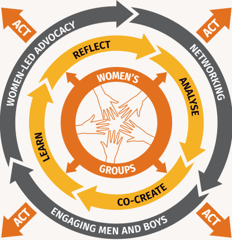
You can find out more about the Women Lead in Emergencies model by downloading the Overview Guidance Note below.
To reach more women with Women Lead in Emergencies, CARE International UK has a new partnership with the GiE Group to pilot offering training and tools to women’s rights organisations and other humanitarian agencies so that they can use the approach in their own programmes.
Impact example: Refugee women lead in Uganda
Women Lead members in Omugo decided they wanted to play an active role in the camp’s decision-making by running for election on the Refugee Welfare Council. Watch the video below to hear from Selwa Alice and other candidates about why they wanted to stand for election, and the change they wanted to see as a result.
Impact example: Roma women lead in Ukraine
CARE’s Women Lead in Emergencies programme in Ukraine combined flexible funding to six women’s rights organisations with support to enable them to use the Women Lead in Emergencies model with their own women’s community groups.
Winds of Change supported 10 Roma community groups in Odesa and Mykolaiv to deliver their own initiatives, including improving waste removal, water filtration systems and inclusive playgrounds for their communities.
Watch the video below to hear more about how this strengthened women’s organisations and community services in Ukraine.
Read more about Women Lead in Emergencies
-

International Women’s Day: How women in Mali are challenging gender norms in climate decision making
Find out how CARE International UK is working with partners in Mali to strengthen the voice and leaderships of women whose communities are at the crossroads of conflict and climate change.
-

Ukraine three years on: How women are standing together in strength and solidarity
Find out how CARE’s Women Lead in Emergencies project is shifting power and resources directly to women in communities affected by the conflict in Ukraine.
-

16 Days of Activism: How women in Nigeria are using education to tackle violence against women and girls
CARE is supporting women and girls in Nigeria to identify what they need from gender-based violence services, and come together to create change.
-

Standing up for the rights of mothers in Ethiopia: ‘We finally have a voice’
Since the outbreak of conflict, the maternal mortality rate in Northern Ethiopia has increased fivefold. Kahsa is supporting women in her community to access healthcare services and stand up for their rights.
-

At the crossroads of climate and conflict, women in Mali are challenging gender norms
In Mali, CARE's GENRE+ (Gender+) project works with women whose communities are at the crossroads of conflict and climate change.
-

World Refugee Day: ‘’Now that I am a leader, I can raise my voice’’
Meet the refugee women in Uganda campaigning to be heard in humanitarian decision making – and winning!
-

Making change happen in humanitarian settings: Perspectives from women refugees leading the way
Women from Colombia, Niger and Uganda share their experiences of working with CARE's Women Lead in Emergencies programme and the different ways they are making change happen in the humanitarian system.
-

We are people of service
When women lead in emergencies, they raise their voices for the vulnerable.
-

I can help women raise their voices
When women lead in emergencies, they no longer have to risk sexual violence in order to eat.


