
At least 469 people have been confirmed dead and more than 1,300 remain missing after flash flooding struck Nepal’s Rasuwa, Nuwakot, and Dhading districts on 26 August. Officials say the death toll is expected to rise, and authorities have declared the affected areas disaster crisis zones for the next three months. CARE Nepal is working with government and local partners to get emergency assistance to the families most affected.
The flood hit shortly before 9am, as many children were walking to school. Scientists at the International Centre for Integrated Mountain Development (ICIMOD) say an ice-and-rock avalanche blocked the Lhende Khola, releasing a sudden surge downstream. The precise cause is still disputed and investigations are ongoing.
“The Lhende Khola has flooded twice in 14 months, this time triggered by an ice-and-rock avalanche from a glacier on the Nepal side that blocked the river and released a sudden surge downstream,” said Saswata Sanyal, a disaster risk reduction specialist at ICIMOD. A barrier lake formed by debris from the initial landslide broke its banks on 28 August, briefly halting rescue efforts in both Nepal and China over fears of a second flood. Authorities have urged residents in high-risk zones to seek higher ground.
The damage is already extensive. Officials have confirmed that 32 bridges and nearly 25 miles of road were swept away, including the entire road from Betrawati in Nuwakot to the Rasuwagadhi border crossing, which links Tibet to Nepal. The worst-hit settlements include Timure and Syaphrubesi, near the border that supports much of the trade and tourism between Nepal and China. The flood affected 14 hydropower and solar projects, with a combined capacity of about 748 megawatts.
The number of people missing has climbed steadily as communications are restored to cut-off settlements. As of August 28, the Nepal Police report that at least 700 of the missing are foreign nationals and another 466 people have been injured. Security personnel, hydropower workers, customs and immigration staff, and trekking guides are also among those still unaccounted. It is important to note that many missing persons cases reflect downed phone networks rather than confirmed deaths.
Rasuwa district is still rebuilding from the 2015 earthquake. Hundreds of families displaced by that earthquake had resettled on the low-lying banks of the Trishuli River. One such community of 250 households has now been swept away entirely, based on reports from CARE’s partners in the area.
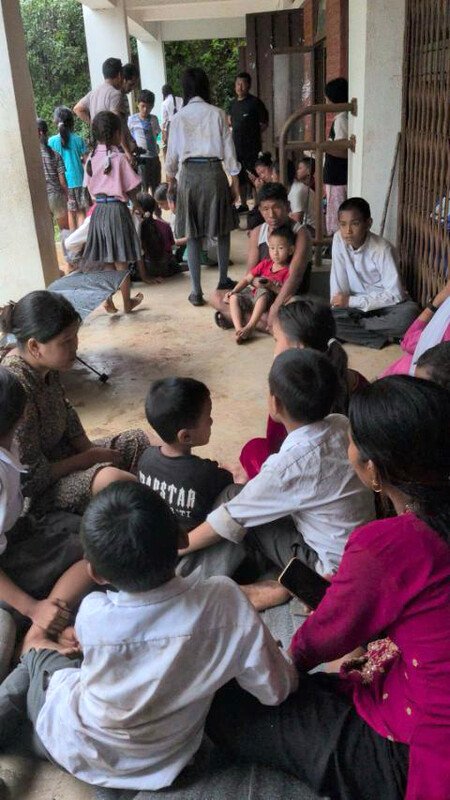
How CARE is responding to the Nepal flash floods
Beyond the immediate rescue, communities face challenges around shelter, food, safe water, health services, protection, and ways to earn a living again. Older people, children, and people with disabilities face those risks differently. To address this, CARE is carrying out a rapid assessment of how the flood and displacement are affecting women and girls in different ways.
At the same time, CARE is working with the National Disaster Risk Reduction and Management Authority (NDRRMA), local partner organisations, and Humanitarian Partnership Platform members to reach affected communities with essential support. Some of CARE’s partner organisations include Community Self Reliance Centre, Community Development Centre Nepal, Manekor Society Nepal, and Sahayatri Samaj Nepal.
Reaching people is the most difficult aspect of the response so far. Washed-out roads and destroyed bridges have left the worst-affected communities extremely difficult to reach, especially in Rasuwa.
CARE is ready with hundreds of CARE PACKAGE® for Emergencies kits. Each contains five types of support: solar panels for light and charging electronics, tarpaulins and shelter materials, water purification supplies, hygiene items, and kitchen utensils with ready-to-cook and ready-to-eat food. CARE has also sent relief items alongside government distributions to the areas that can be reached.
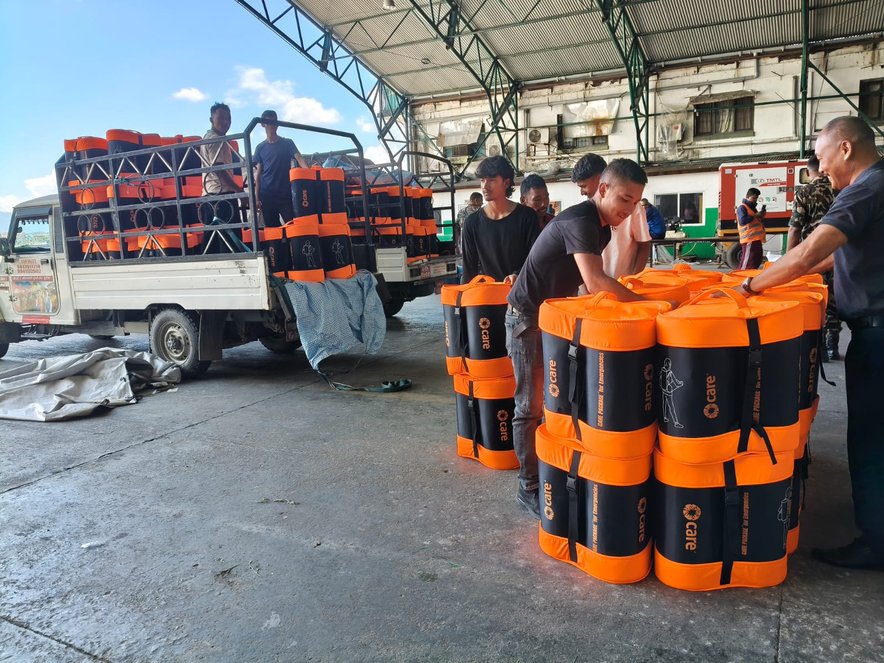
More than 100 packages have been handed over to the NDRRMA and the Prime Minister’s Office for distribution. The Nepal Army is transporting these supplies to Dhunche, Rasuwa, as additional emergency supplies are mobilised. Families staying in temporary shelters urgently need ready-to-eat food. Longer-term, they will need transitional housing.
CARE Nepal is working directly with authorities to help coordinate the national response. A further 290 community volunteers trained in emergency preparedness are on standby, working alongside the Federal Response Team led by the Prime Minister Relief Committee.
More than 10,000 households along the Trishuli corridor need emergency shelter and relief supplies. Humanitarian organisations are still working out the full scale of what people need.
CARE is clear this is more than an emergency. The flood has cut the only overland route linking Kathmandu to Tibet. On the Tibetan side, the Gyirong Port, which handled nearly a third of trade between Nepal and China in 2024, took the direct force of the floodwaters. Disease is a further risk as floodwaters recede and water and sanitation systems remain damaged.
The Government of Nepal has asked both India and China for help with the rescue effort. The Nepali Army, Armed Police Force, and Nepal Police have been deployed for search and rescue.
About CARE in Nepal: CARE began working in Nepal in 1978 as one of the country’s first international humanitarian organizations. For over 40 years, CARE Nepal has partnered with at-risk communities to fight poverty, promote equality, teach practical skills, and help people build better lives. Today, CARE Nepal works to address the root causes of poverty and discrimination — whether based on gender, background, or location. The organization also helps communities prepare for and respond to environmental change and natural disasters. In fiscal year 2025, CARE in Nepal reached 1.14 million people, 53% of whom were women and girls.


