
Hi, I’m Azaria, CARE International UK’s Digital Content Executive. Earlier this year, I travelled to Jamaica – partly on holiday, and partly for work. While I was there, as part of CARE’s response to Hurricane Melissa, I met with CARE’s local partner organisations and the communities with whom we work.
I spent much of my time with Tamisha Lee, President of the Jamaica Network of Rural Women Producers, one of CARE’s key local partners. The Network supports women farmers with businesses of all sizes across the island, bringing them together in community groups where the women decide which resources, training and tools are needed to grow their businesses. This work is critical in a country where women make up just 33% of all registered farmers.
During the visit, we travelled to four different communities, each of which experienced Hurricane Melissa in different ways.
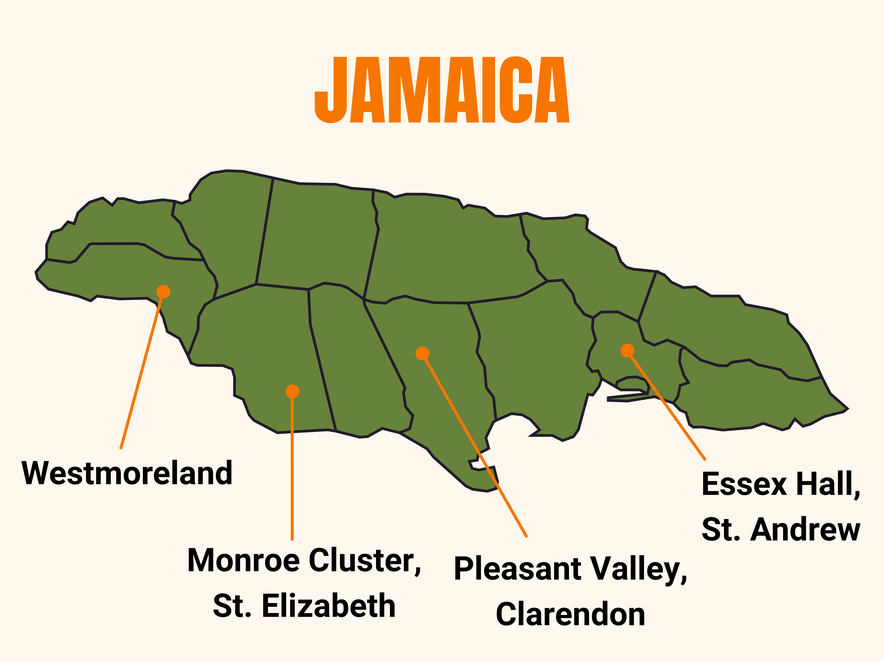
Our first visits were to Essex Hall in St Andrew and Pleasant Valley in Clarendon. These communities did not experience significant damage from the hurricane, but residents either have never had access to running water or have lived with unreliable water supply since the storm. Even before Hurricane Melissa, the lack of water made daily life and agricultural work extremely difficult. When asked what life is like without a reliable water source, Eveat Grandison said:
“It’s terrible, terrible, terrible. We have to catch a little water to go and bathe. Sometimes we don’t even get to bathe well as women, and the children don’t go to school. It’s really hard.”
Another lady in the community, Annemarie Ellen, said:
“You have to wake up at 3am to get water when it comes, then we carry it from the central pipe. We try to catch water and store it. Every little empty bottle we have, we fill.”
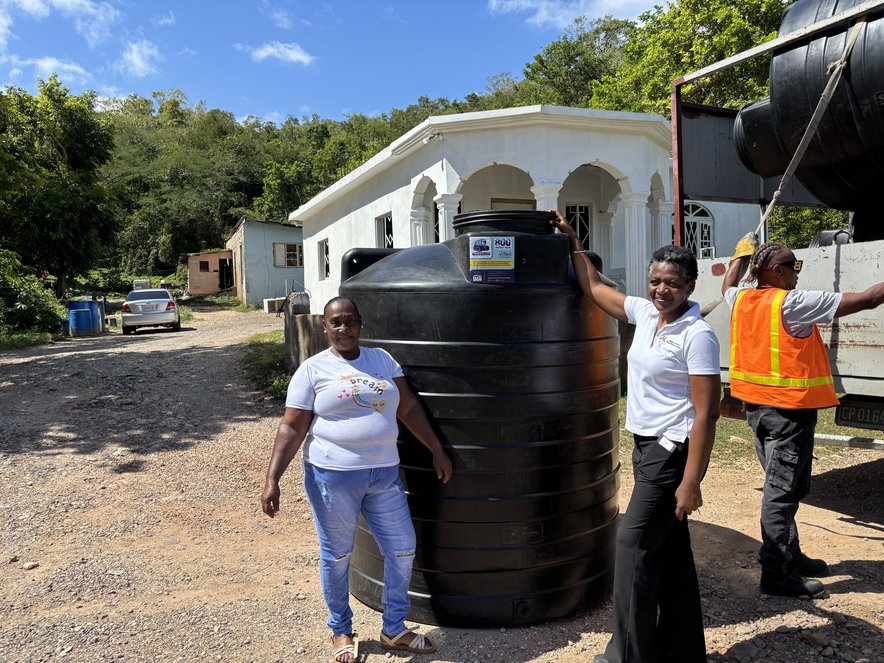
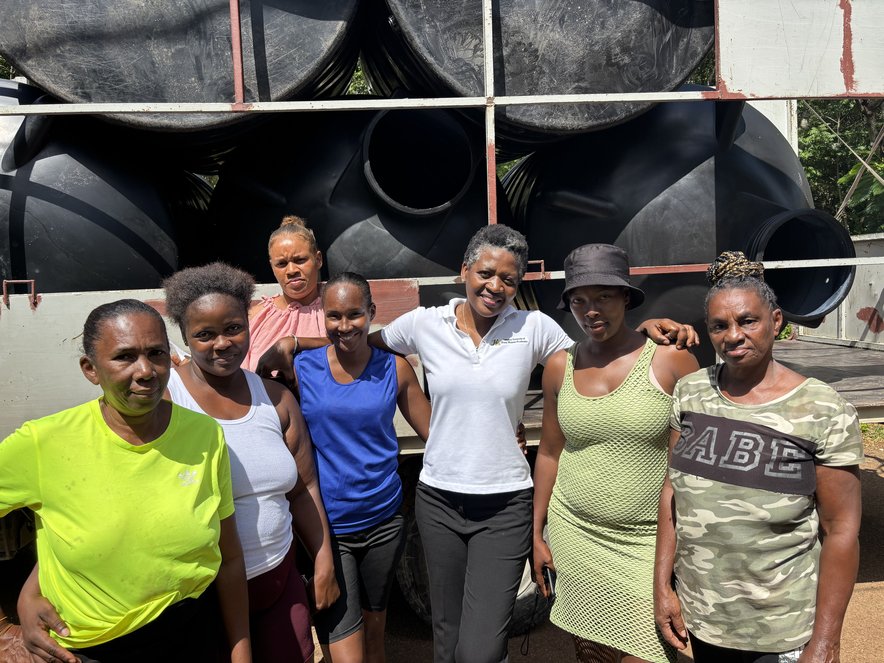
Through CARE’s response, women in these communities received 80-gallon water tanks, with CARE also providing a one-off water top-up. When I asked what difference this would make, the most common response was simple: “It will change a lot. Life will be easier for us with water.” (Christina Johnson, Pleasant Valley)
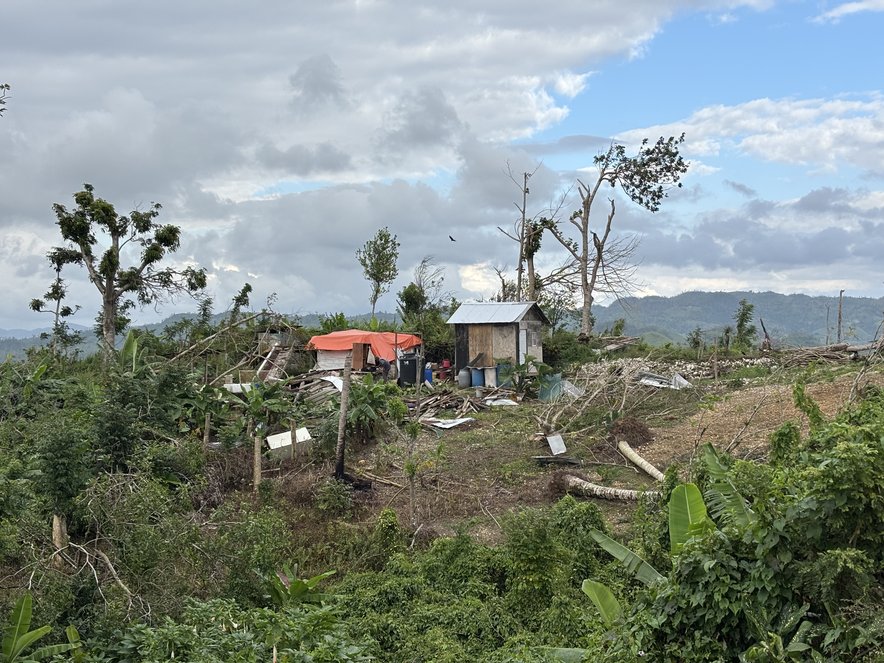
We also travelled to the west of the island, which was hit by a Category 5 hurricane and experienced the most severe devastation. The impact the storm has had on livelihoods is still evident. Tourism has been heavily affected, with many hotels not yet functional, schools still undergoing repairs, and fishing communities left without boats after they were destroyed by the storm.
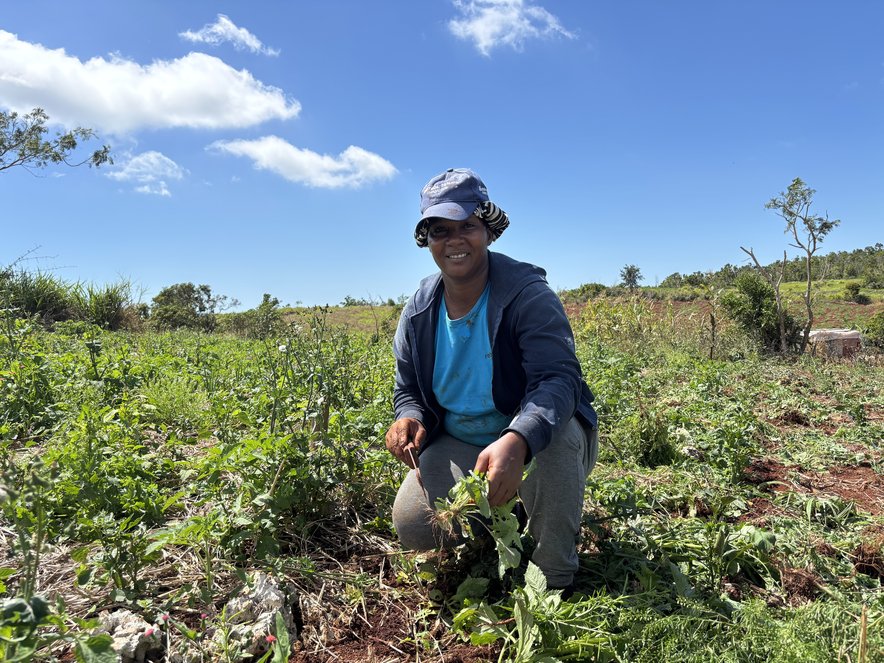
In St. Elizabeth, we met women farmers whose homes and fields had been badly damaged. While many spoke with confidence about their own ability to recover, the biggest challenge they described was the chain reaction caused by the collapse of tourism. One of the farmers we met, Linneth Whiteley, said:
“We’ll get back there but it will take a while. If the Western part of the island didn’t get so much damage then things would be better – tourists would be on the island and the hotel industry would open, then they would take off that big amount from the farmers … We’re not getting a lot of buyers right now and even if they do buy from you, they don’t know where to sell it.”
As a result, fruit and vegetables are left rotting in the fields.
In the Monroe community, electricity had only been restored almost four months after the hurricane. Without power, daily life became even harder — no fridges to store food, no washing machines, and no way to charge phones or other essential devices.
As we drove through St. Elizabeth and Westmoreland, the lasting effects of Hurricane Melissa were everywhere. Trees leaned across roads, some still stripped bare. Roads were damaged, rivers had overflowed and still hadn’t retreated months later, and many homes were still covered with tarpaulins instead of rooves. Carrol was one of the people we met who had been living in a tent for the four months following the hurricane, after her home was completely flattened.
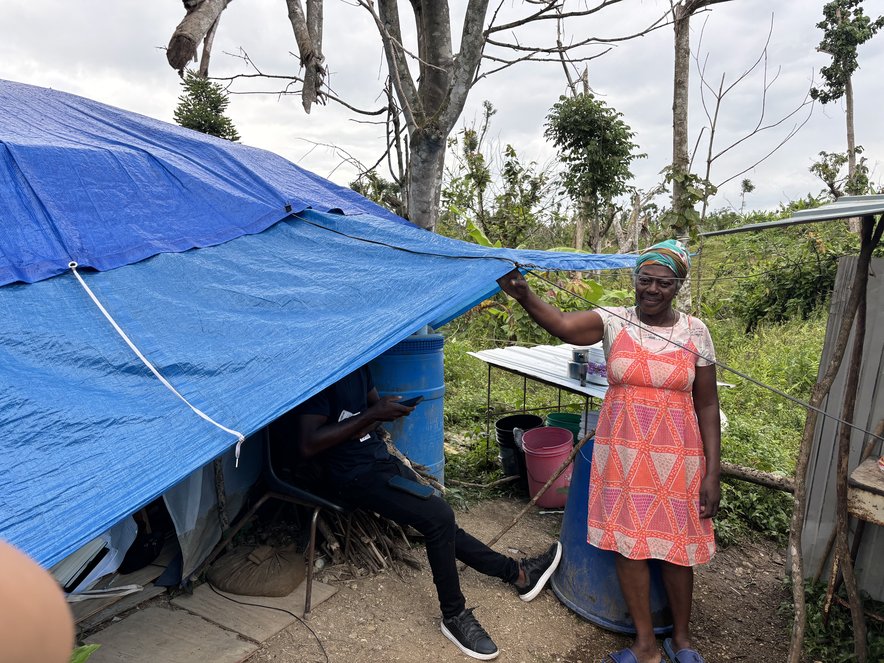
One of my biggest personal takeaways from this trip was the remarkable positivity I encountered in every conversation. Despite losing homes, livelihoods and security — and facing long, uncertain rebuilding efforts — there was a strong sense of optimism and hope for the future.
In Carrol's words:
“I’m just hoping for the best. I still feel good because I don’t make anything trouble me. I got used to it. I still have life so I still go on.”
Before Hurricane Melissa made landfall, international news headlines predicted the storm would completely destroy Jamaica. Many of my Jamaican friends were frustrated by the implication that the country was not strong enough to endure and recover. While the hurricane did cause immense damage, the strength and resilience I witnessed on this visit in every community was undeniable.
No one I spoke to wanted pity. What they wanted was support — support to rebuild what they had before the storm, on their own terms.
This perspective sits at the heart of CARE’s work. We are not there to provide emergency assistance as we see fit. Instead, we work with local partners who know and understand the people we support. We listen to what women need and then we work to deliver long-term, sustainable support which provides them with the tools they need to drive change in their own families and communities.
Six months have passed since Hurricane Melissa and many people still need urgent assistance to rebuild their lives. Please consider donating so that we can continue working through our partners to get food, water, shelter and support to those who need it most.


