
Gaza continues to face a catastrophic shelter crisis. 1.7 million people are living across in displacement sites, mostly in makeshift shelters. Nearly one million people live in tents, while thousands more are sleeping outdoors or sharing overcrowded accommodation.
To help families begin rebuilding their lives, CARE and local partner PARC are piloting a people-led cash-for-shelter scheme in Gaza. Households receive cash and technical support to buy shelter materials, hire labour and repair their homes themselves. This practical approach enables families to lead their own recovery while making limited resources go further.
Small repairs. Big difference.
The repairs are usually modest, but transformative, focused on restoring the essentials that allowed everyday life to resume. They include:
- Replacing or repairing doors and windows
- Creating internal partitions for privacy
- Repairing kitchens and basic cooking areas
- Restoring toilets, showers and sanitation facilities
- Sealing damaged walls and openings with locally available or salvaged materials
- Making basic repairs to living and sleeping spaces
Despite severe shortages of construction materials, families identified locally available solutions, reused salvaged materials, and adapted repairs to their own priorities. A damaged wooden pallet became a window frame; furniture parts were repurposed as fittings; plastic sheeting restored privacy where walls had been destroyed.
Mona’s story
One of the people supported by our shelter scheme in Gaza is 56-year-old Mona. In May 2026, after a long period of forced displacement in southern Gaza, Mona returned to her home at the northern edge of Gaza City. With her was her daughter and son-in-law, their two children and also her brother who had lost his entire family. They had strong hopes of being able to start over and begin rebuilding their lives.
Instead, Mona found a house that was still standing but no longer habitable. Walls were cracked and partially collapsed, doors and windows were missing, and the bathroom had been completely destroyed.
She says: “When I saw the house after the period of displacement, I felt as though I was entering a strange place, not the home I had lived in for years. Every corner was broken and destroyed, and the walls that once protected us had become partially damaged. I stood there, unable to do anything but cry…
It felt as if I had lost my entire life in a single moment.”
Relocated once again
With no income to repair the damage, Mona was forced to relocate again, living as a guest with relatives in overcrowded accommodation shared by several families. Space was limited, privacy non-existent, and the environment filled with constant noise and continuous movement. These challenges were compounded by water shortages and the difficulty of meeting even basic needs.
“Every day I kept asking myself: how long will this continue?” recalls Mona. “I tried to appear strong in front of my daughter and the children, but inside I was broken and afraid of the future.”
The road to restoration
Our project team visited Mona, assessed the damage to her home and worked with her to identify the most urgent repairs. Together, they restored damaged walls and rehabilitated the sanitation facilities, living areas and kitchen.
After months of forced displacement, Mona and her family are now finally able to live with dignity in a home they can call their own.
Speaking about her participation in the project, she says:
For the first time I felt that our suffering had not been forgotten.
"When I was told that the house would be rehabilitated, I felt as though I could breathe again after a long period of suffocation."
She adds, emotionally:
“The day I entered the house after the rehabilitation was one of the most powerful moments for me. Despite the modest resources, simply opening my door, stepping into a safe and clean place, and sitting with my family under one roof was indescribable. It restored my sense of dignity and stability that I had lost during displacement.
“Today, the house has become a true shelter for all of us. We may have lost a lot, but having a safe home that brings us together after everything we’ve been through is, for me, the greatest blessing and the strongest reason to hold on to hope.”
How you can help people like Mona
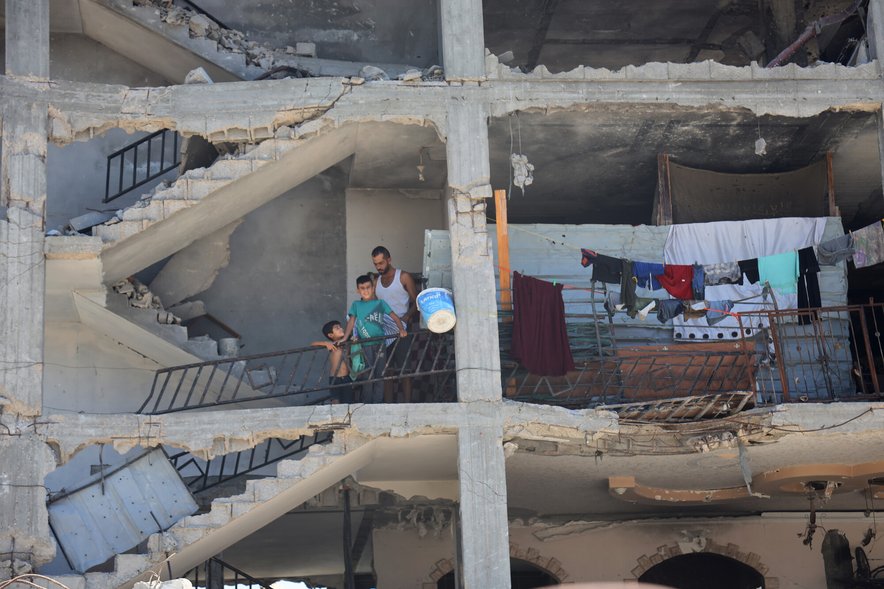
Mona's story reflects the reality facing thousands of families across Gaza. Many homes are still standing, but the devastating conflict has left them too damaged to provide safety, privacy or dignity.
CARE is working alongside local partners with families like Mona's to repair homes and help people rebuild their lives. But the scale of need is immense.
With your support, we can reach more families with the cash and practical assistance they need to return home and recover. Please donate today.


