
The global rollback on rights is having a chilling effect on women’s ability to discuss political issues, in private homes and public spaces without fear of harassment.
Analysis by CARE International UK (CIUK) and Equal Measures 2030 shows that women’s freedom to speak openly about politics has dropped steadily since 2012, with current levels now at their lowest since 1997.
This analysis paints a stark picture of the global state of gender equality. Around the world, progress is not just slowing - in many places, it’s moving backwards. More than half of countries worldwide have seen a decline or stagnation in women’s freedom of political expression in the last decade.
A world where women’s voices are silenced?
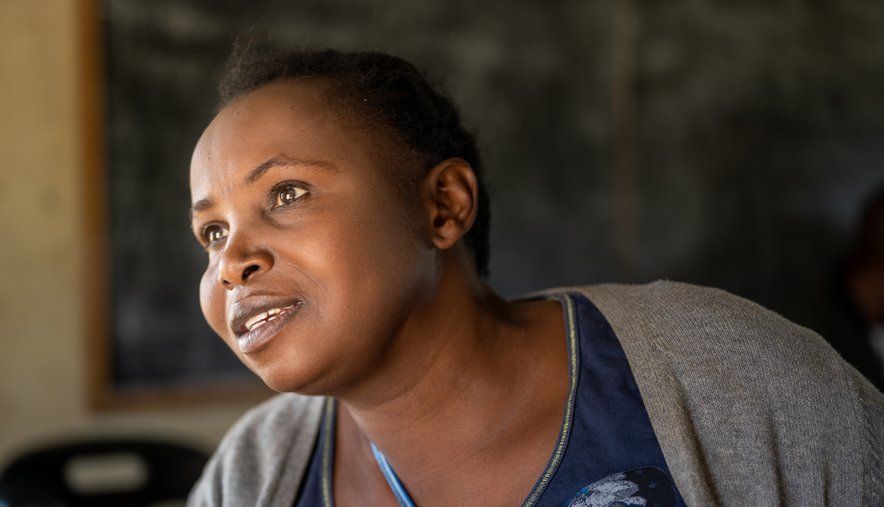
More than 1.3 billion women and girls live in countries where speaking out is occasionally exposed to intervention and harassment. For 800 million women, the situation is even more severe. They live in places where freedom of expression for women barely exists at all. Their voices are not just discouraged; they are systematically suppressed.
If nothing changes, an expected 1.74 billion women and girls will be subject to restrictions on their freedom to express their political views by 2050.
When women are silenced, they lose their rights, and societies lose more than half their potential. Democracies weaken. Inequalities deepen. Violence goes unchallenged. And the world becomes less safe for everyone.
Global aid cuts and a leadership vacuum
This decline is unfolding at the same time as funding for women’s rights organisations and programmes targeting gender equality outcomes are being cut, leaving those on the frontlines with fewer resources to respond.
Despite the UK Government’s long-standing commitments to advancing the rights of women and girls internationally, the government continues to plan major reductions to foreign aid programmes designed to protect those very rights. These cuts risk undermining decades of progress and weakening support systems for women and girls in some of the world’s most vulnerable contexts. Meanwhile new polling from YouGov and CARE International UK shows that under 4 in 10 (39%) of UK adults believe that the Labour government care about the rights of women and girls. The convergence of rising authoritarianism, shrinking civic space, and declining investment in gender equality creates a dangerous moment.
Without urgent action, millions more women and girls could lose the ability to participate fully in society - politically, socially, and economically.
What the UK Government can do
Polling from YouGov commissioned by CARE shows that 85 per cent of the UK public think that the UK should be involved in addressing women and girls’ rights around the world – sending a clear message to the Government that action must now speak louder than words when it comes to addressing gender equality.
CARE International UK is calling on the government to embed global defence of gender equality as a strategic foreign policy priority, and to continue funding and protecting the women’s rights organisations and human rights defenders who are holding the line globally.
Methodology
- Source: This analysis was conducted by Equal Measures 2030 (EM2030) using data from the Varieties of Democracy Project (V-Dem). V-Dem, based at the Department of Political Science at the University of Gothenburg and with collaboration from the Kellogg Institute for International Studies at the University of Notre Dame, provides one of the world’s most comprehensive datasets on democracy and civil liberties, covering 179 countries and territories annually. V-Dem data are based on assessments by multiple country experts and use statistical modelling to produce comparable and reliable country scores over time.
- Equal Measures 2030 is a coalition of leaders from feminist networks, civil society and international development across the globe who connect data and evidence with advocacy and action on gender equality. Find out more at equalmeasures2030.org
- Question: Freedom of discussion for women (C) (v2cldiscw): Are women able to openly discuss political issues in private homes and in public spaces?
- This indicator specifies the extent to which women are able to engage in private discussions, particularly on political issues, in private homes and public spaces (restaurants, public transportation, sports events, work etc.) without fear of harassment by other members of the polity or the public authorities. We are interested in restrictions by the government and its agents but also cultural restrictions or customary laws that are enforced by other members of the polity, sometimes in informal ways.
- This question does not ask you to assess the relative freedom of men and women. Thus, it is possible to assign the lowest possible score to a country even if men and women enjoy equal --- and extremely low --- rights to freedom of discussion.
- Scoring rubric:
- 0: Not respected. Hardly any freedom of expression exists for women. Women are subject to immediate and harsh intervention and harassment for expression of political opinion.
- 1: Weakly respected. Expressions of political opinions by women are frequently exposed to intervention and harassment.
- 2: Somewhat respected. Expressions of political opinions by women are occasionally exposed to intervention and harassment.
- 3: Mostly respected. There are minor restraints on the freedom of expression in the private sphere, predominantly limited to a few isolated cases or only linked to soft sanctions. But as a rule there is no intervention or harassment if women make political statements.
- 4: Fully respected. Freedom of speech by women in their homes and in public spaces is not restricted.
- Total sample size was 2,208 adults. Fieldwork was undertaken between 23rd – 24th of February 2026. The survey was carried out online. The figures have been weighted and are representative of all UK adults (aged 18+).


